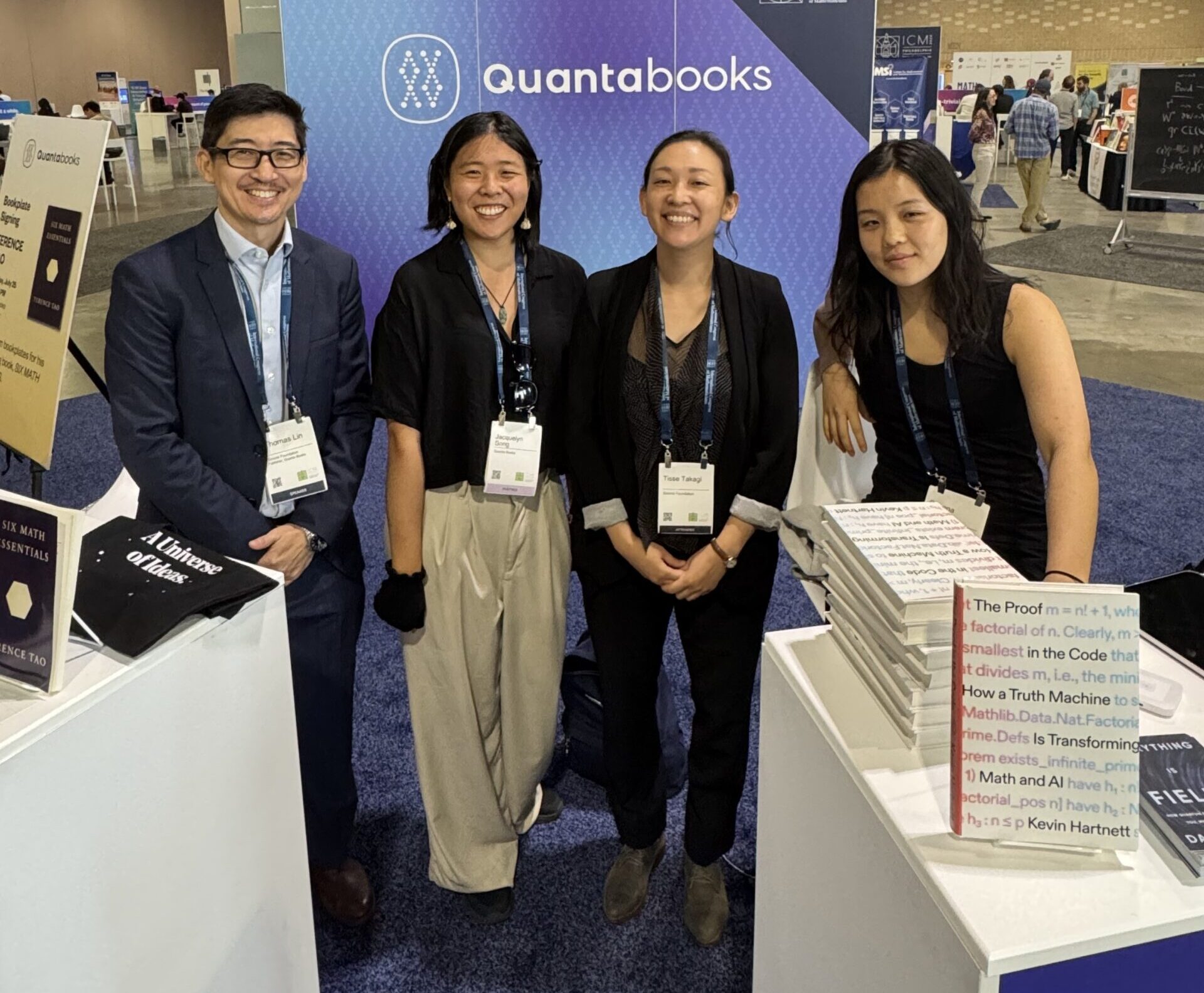
Last month, the Quanta Books team attended the 2026 International Congress of Mathematicians (ICM), the largest math conference in the world. Held at the Pennsylvania Convention Center in Philadelphia, it was the first ICM in the United States since 1986. It was a delight to meet professors, researchers, and students from around the world!
On Saturday, July 25, Quanta Books hosted three events: a bookplate signing with Terence Tao for his forthcoming book, SIX MATH ESSENTIALS, and a conversation with Kevin Hartnett and publisher Thomas Lin about Kevin’s recently published book, THE PROOF IN THE CODE, followed by a book signing. THE PROOF IN THE CODE tells the story of Lean, a computer language for verifying math and code and a proof assistant for advancing math research, and of the cast of characters who made it a reality.
Order THE PROOF IN THE CODE here.
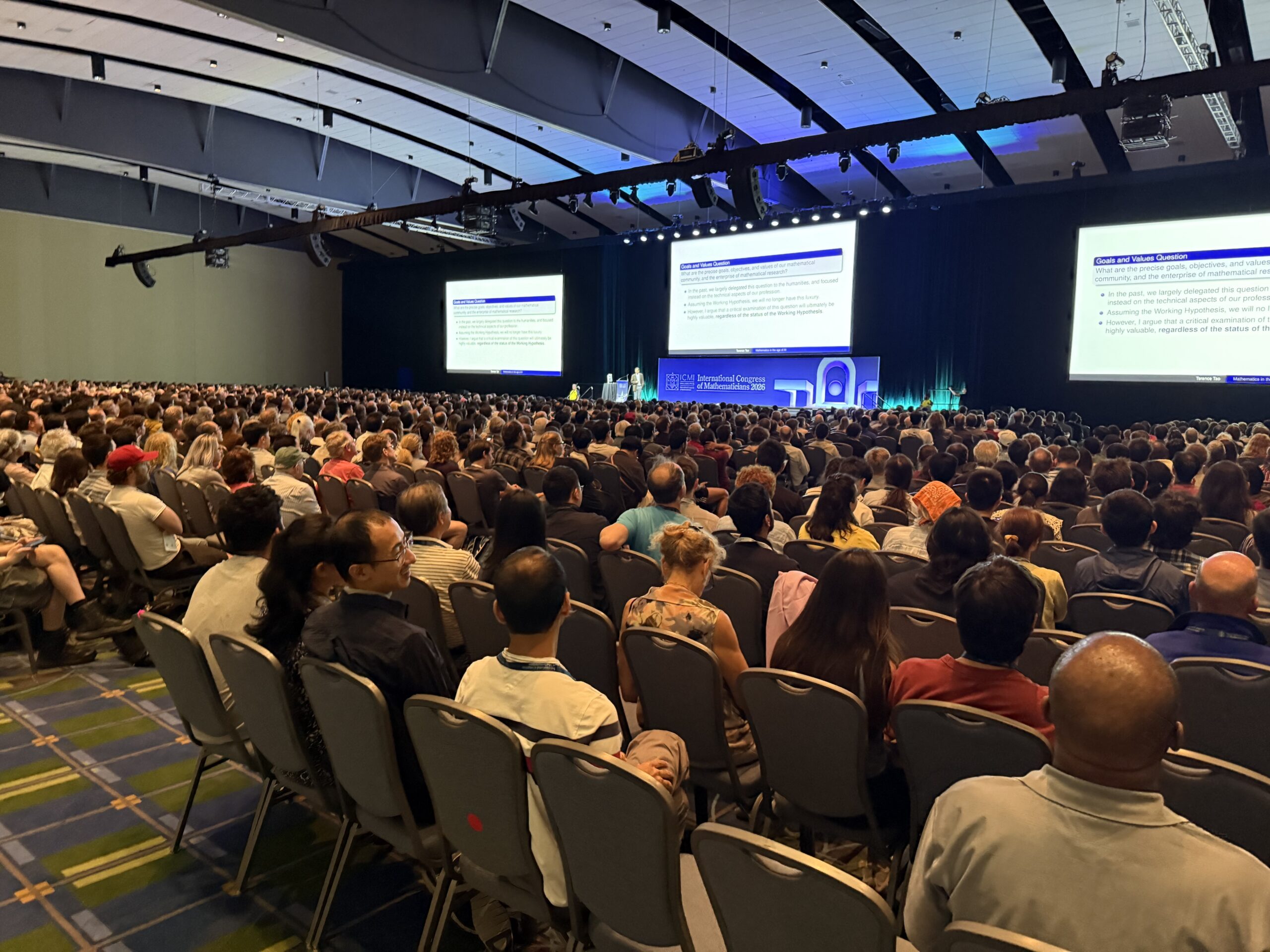
On everyone’s mind at ICM was the role of AI in mathematics and the future of the field. Terry Tao’s Friday evening state of the union on “Mathematics in the Age of AI” (supplemental slides here) was packed, and in his talk he named Lean as an essential technology in verifying AI-generated math proofs.
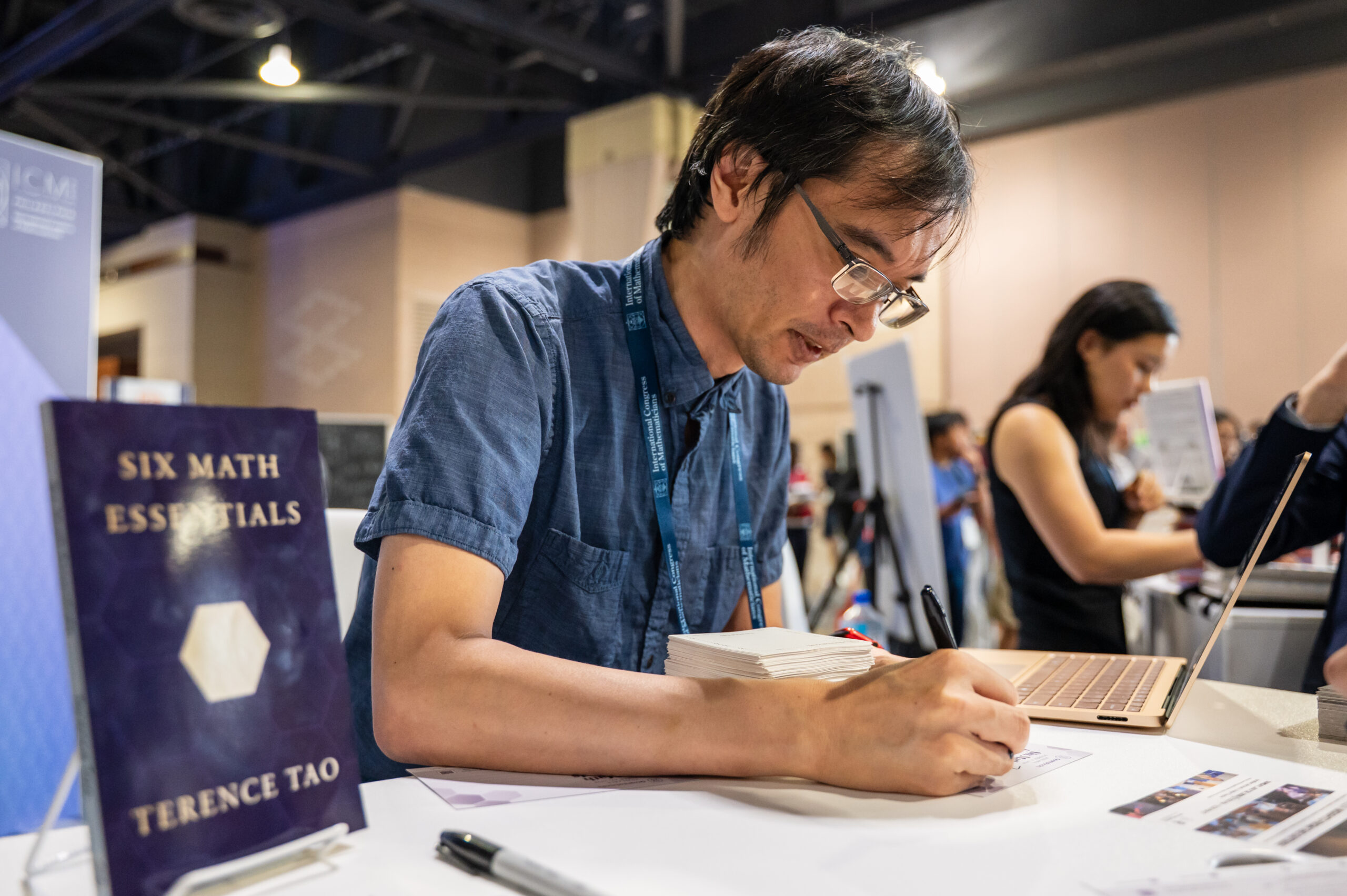
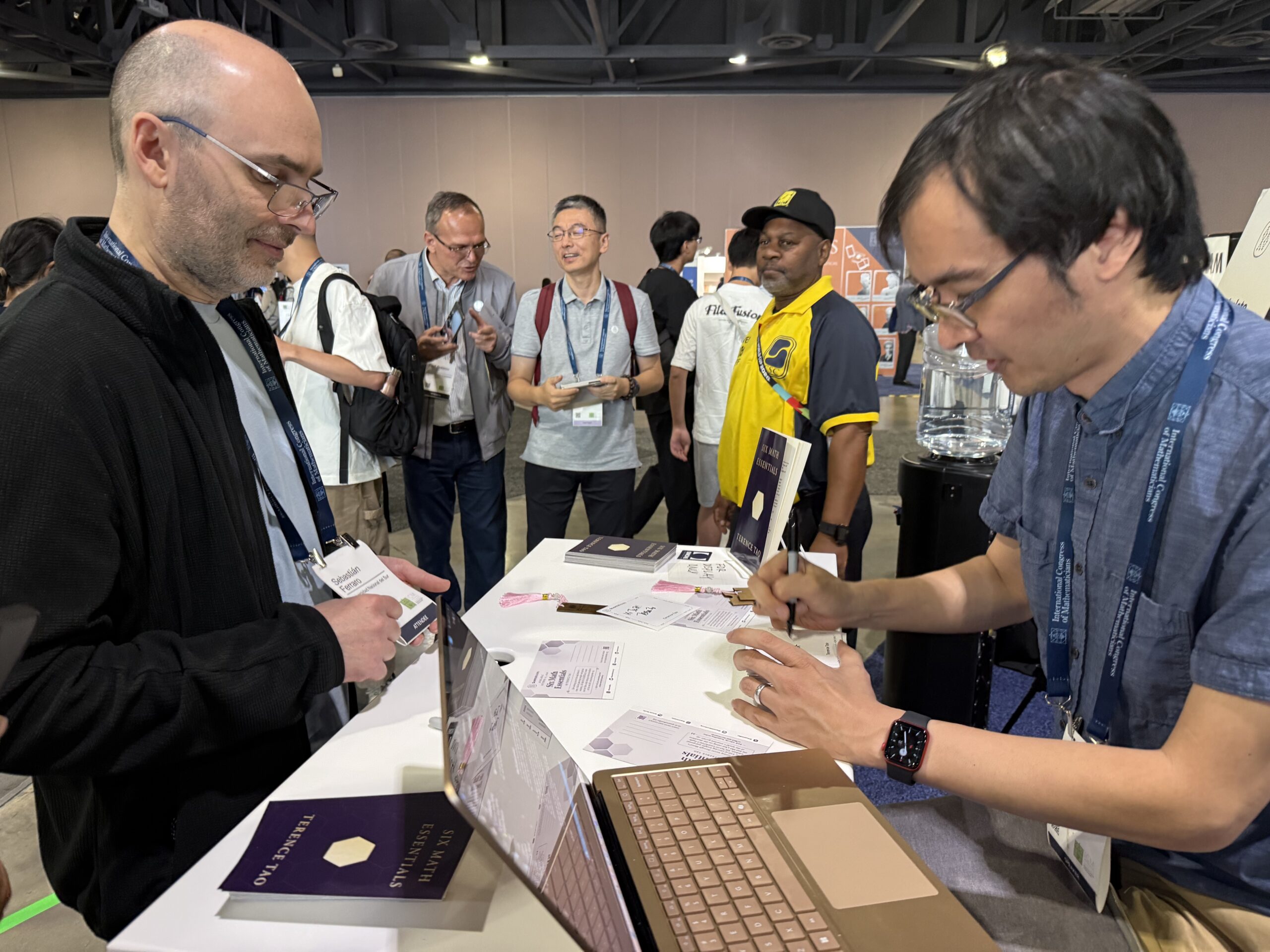
The next morning, Terry appeared at the Quanta Books booth for his bookplate signing (SIX MATH ESSENTIALS publishes October 27). The line wrapped around our booth and the one beside it, and over the next hour, he signed over 200 bookplates for an appreciative crowd of fans.
Preorder SIX MATH ESSENTIALS here.
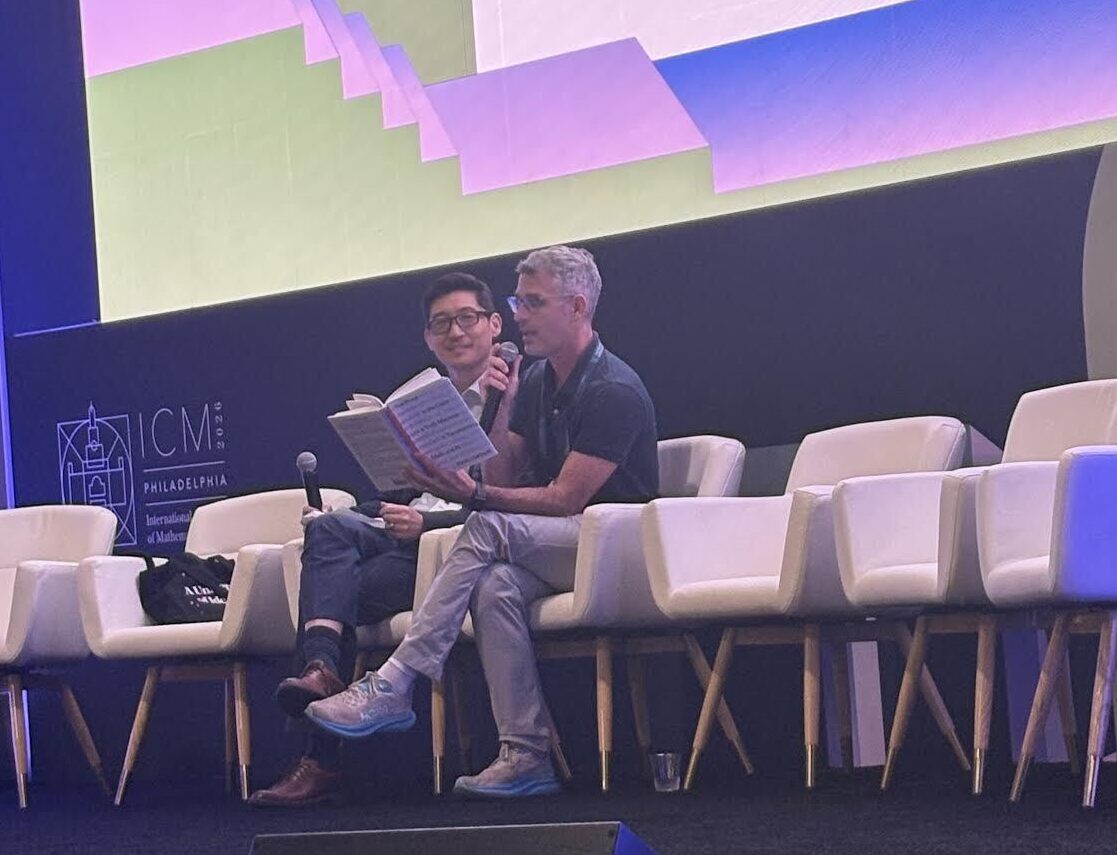
Saturday afternoon, Kevin Hartnett joined Thomas Lin on the Benjamin Franklin Stage to speak to a standing-room only audience about how Lean developed from an obscure bug-checking program into a tool capable of transforming math as we know it. In the crowd was mathematician (and a key figure in THE PROOF IN THE CODE) Jeremy Avigad, who took to the microphone himself to answer a question from the audience.
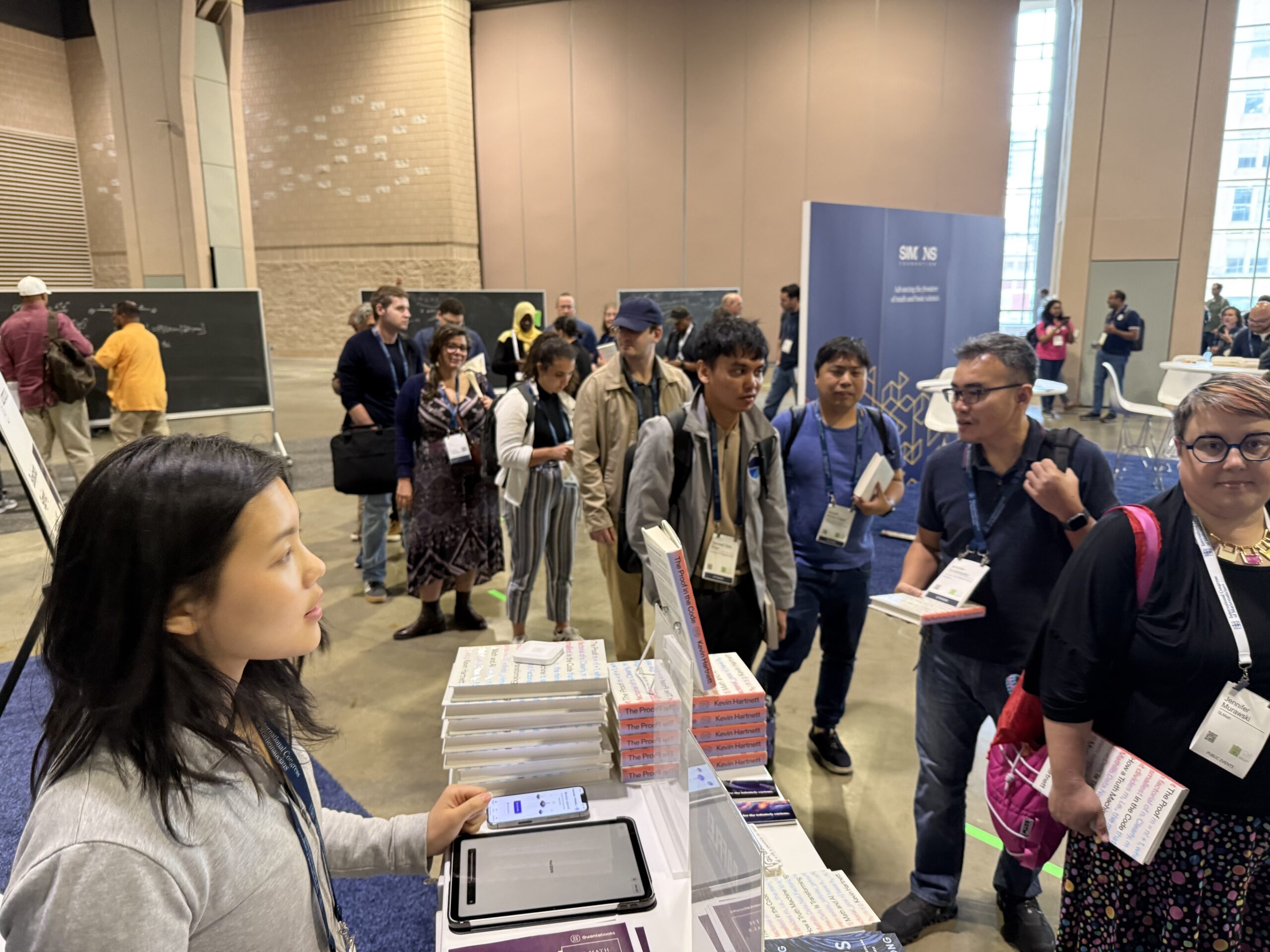
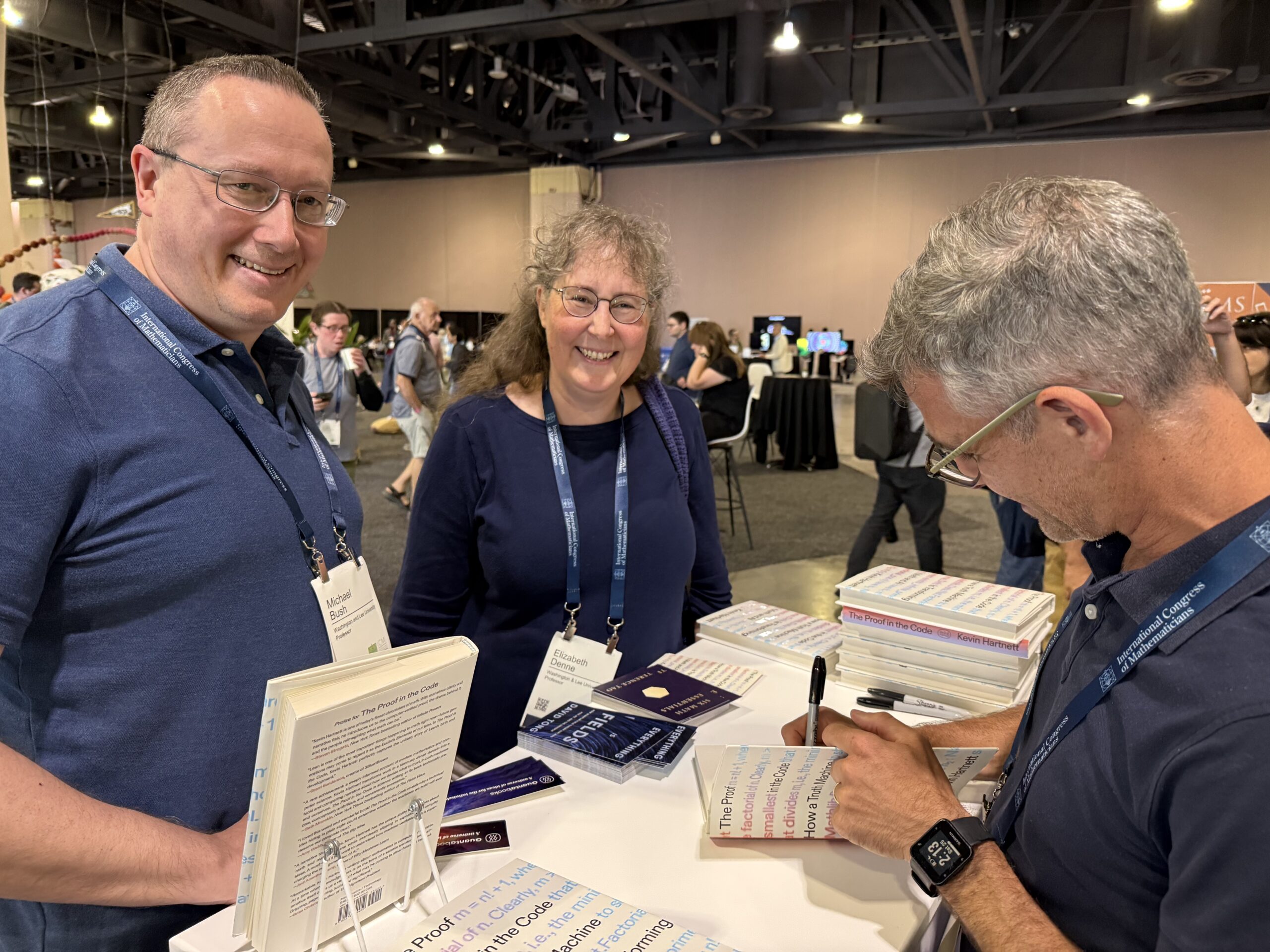
Following the talk, Kevin signed copies of THE PROOF IN THE CODE, answering questions and taking pictures with readers, many of whom had been following his work since his early articles in Quanta Magazine.
Today, when computers can replicate much of the math done even by graduate students, visitors to our booth emphasized how the future of math education should still require true understanding and wonder, as Kevin has underscored in public events. They were also drawn to the simplicity and elegance of Terry’s SIX MATH ESSENTIALS, and its message that mathematical thinking is for everyone. The book, one professor mused, reminded him how math reveals the miracle of the world around us.